Claude, how is my driving? And by driving I mean how well am I running sprint ceremonies?
I don’t miss rigid, corporate-style performance reviews, but there is value in getting feedback (not that you would get much useful feedback from corporate reviews anyway). I created a Claude Skill to assess my performance as a Scrum Master, a sort of ‘facilitation code review’ for meetings.
How I built it:
- Inputs: Read.ai transcripts from sprint planning, reviews, and retros
- Framework: Scrum.org’s “8 Stances” filtered to what’s observable in ceremony transcripts
What it measures:
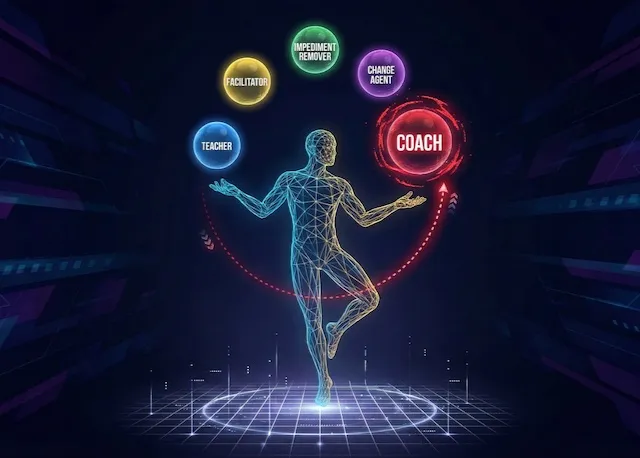
- Facilitator - Time management, balanced participation, staying on topic, managing tangents
- Coach - Asking vs. telling ratio, empowering team to solve problems vs. providing answers
- Teacher - Clarifying Scrum purpose, explaining “why” behind practices
- Impediment Remover - Surfacing blockers, committing to action, follow-through references
- Servant Leader - Protecting team from scope creep, advocating for realistic commitments
- Process Guardian - Sprint Goal clarity, Definition of Done adherence, ensuring event purpose is met
Output: a full rubric with behavioral anchors for each level (1-5 scale), packaged as a reusable skill. I fine-tuned it by running it on a handful of prior ceremony transcripts.
Did it work? Yes. I found out I’m doing reasonably well, with a couple of development areas:
- On the coach side: “try waiting 5 seconds before offering your view”
- On the teacher side: “no explicit references to Scrum principles”
I did push back on the second one (“Lecturing experienced teams on Scrum 101 is condescending and wastes time”). Claude made a fair point: it’s not about teaching Scrum theory but about preventing process drift and making shortcuts explicit when they happen.
If you’d find this useful, I’m happy to share the skill - reach out on LinkedIn.